
Walkway Installation in Petaluma, CA
Flagstone and paver walkways for front entries, side yards, and garden paths — built on a properly graded base so they stay level through North Bay winters instead of settling or heaving with the clay soil underneath.
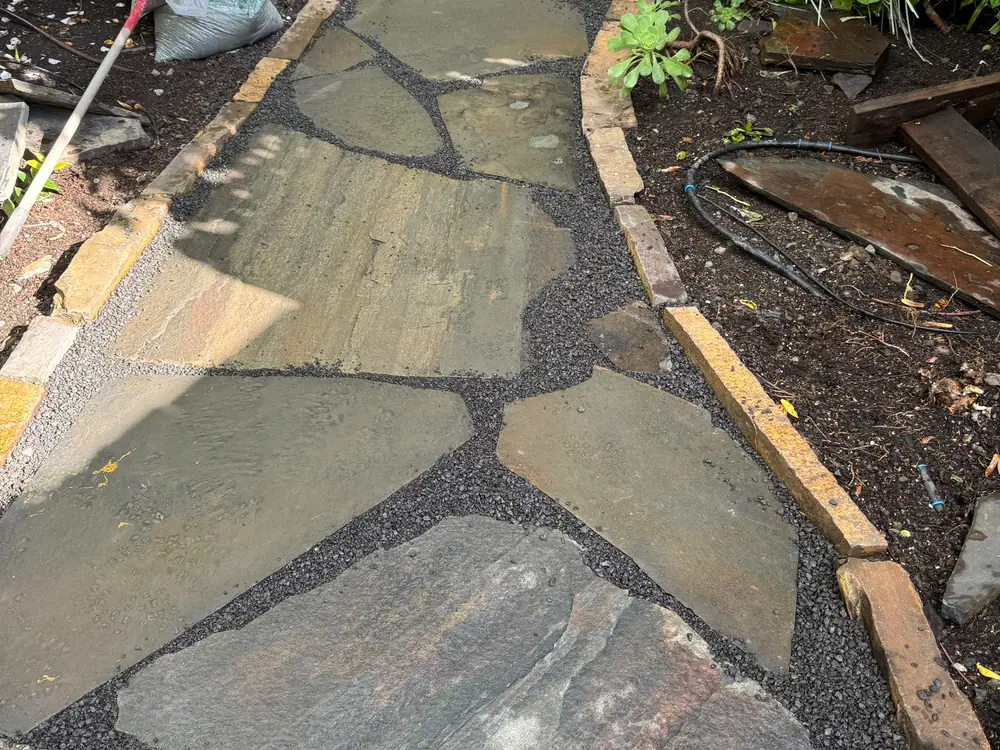
Signs You Need a New Walkway
- An old concrete or asphalt path is cracked or has settled unevenly
- There's no defined path from the driveway to the front door
- A muddy or bare-dirt route has worn in across the lawn
- A new patio, deck, or garden area needs a path connecting to it
How We Build a Walkway
1. Layout
The path is marked based on how the space is actually walked, not just the shortest line between two points.
2. Excavation & base
Excavated to depth and filled with compacted base material, graded for drainage.
3. Setting the material
Flagstone, pavers, or stepping stones are set level and jointed for stability.
4. Edging & finish
Edge restraints lock the path in place and keep surrounding soil or mulch from creeping in.
What Affects Walkway Pricing
Length & width
Longer, wider paths need more base material and more stone.
Material
Flagstone costs more than standard pavers or stepping stones.
Terrain
A sloped or stepped walkway takes more layout and labor than a flat, straight path.
Removal of old material
Tearing out old concrete or asphalt adds to the job versus building on bare ground.
Walkways Across the North Bay
We build walkways throughout Petaluma and neighboring Rohnert Park,Santa Rosa, and Novato.
Frequently Asked Questions
What's the difference between a walkway and a patio project?
A walkway is a path connecting two points — a driveway to a front door, a side yard to a backyard — while a patio is a destination space for sitting or dining. They use similar materials and base prep, but a walkway's layout is driven by how people actually move through the property rather than by seating or entertaining space.
Can a walkway be built on a slope?
Yes — on Petaluma's hillside lots, a walkway is often stepped or built with a gentle grade rather than left as a straight slope, especially where it connects to stairs or a retaining wall.
What material holds up best for a garden path versus a front entry?
A front entry walkway usually gets a more finished material — flagstone or a tighter paver pattern — since it's the first thing visitors see, while a garden path can use a more casual material like stepping stones or gravel-set pavers. Both need the same base prep underneath to stay level over time.
How wide should a walkway be?
A single-person path is typically around 2-3 feet wide; a main entry walkway that two people can walk side by side usually runs 4-5 feet. We'll size it to how the space is actually used rather than a one-size-fits-all number.
Need a walkway built?
Call for a free estimate on your Petaluma-area walkway project.